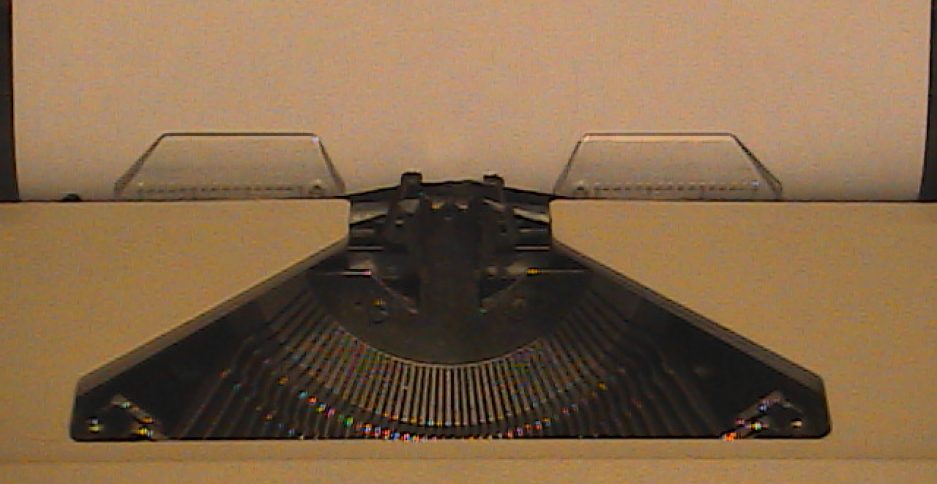
Ouch! Handling Rejection
Something strange happened to me. I received a rejection from a literary magazine via e-mail. No, the strange part isn’t that I received a rejection through an e-mail. I have a stack of 50 plus envelopes saying, “Sorry, but your story, ‘Blank,’ doesn’t fit our needs.” I have another 50 or so in my indox. What was strange is I received a rejection notice within 24 hours from sending the story (a first in my writing career), and it stated, “We could tell by the cover letter alone that your story wouldn’t fit our magazine.” Yeah, it bruised my ego a bit, not for the fact that my story, “The Kane Brothers,” didn’t fit their magazine content, but because they barely gave it a chance. They glanced at the cover letter alone and turned it down.
First off, a cover letter is meant to hook the editor into reading further, and I am very proficient in writing “hook-worthy” cover letters. If an editor can’t get passed the cover letter, they won’t read the story. With my, say 150 rejections, I assume that editors liked the cover letters enough to read the stories and decided by their contents that they didn’t feel they were a good fit for the magazines. If some of them didn’t move passed the cover letters, so be it. If some of them didn’t even move passed the first page, okay, my fault for not making said story compelling enough for you to read. The thing is, though, that the editors of the 150 other rejections didn’t tell me, specifically why they didn’t take the story, just that they didn’t take them. The editor of this magazine, I’ll call it, “won’tgiveyourstoryachance.com,” divulged that information. “Give the story a chance,” I thought after I read the rejection, “You might like it, and it might fit your magazine.” Looking back, I should’ve replied that previously quoted thought. I didn’t, though. I replied the standard, “Thank you for the opportunity for submitting my work. Good luck.”
Here’s a cold fact about writing: you will get rejected. It’s as inevitable as a snowfall in an east coast winter. It happens, and not one writer—new or experienced—has ever dodged that evil notice that starts, “Thank you for your interest, but…”
Here are some bright sides to rejection: first, someone read your story, and it’s getting from point A to point B. Second, you’re living the life and the routine of a writer. As I previously stated, not one writer has avoided a rejection. Third, if there’s no challenge or work in sending out stories or articles, where’s the fun? Fourth, it allows you to reevaluate your work. Lastly, it builds character.
Think of your favorite artist whether it’s a writer, actor, musician, or comedian. Anyone who’s anyone has been turned away because that’s just how it is. Statistically speaking, you don’t make a mark on your first try. You think J.K. Rawling never received rejections for The Harry Potter novels? You think Ray Bradbury never received a rejection for “The Sound of Thunder?” Trust me, they did. You don’t reach success without hitting the occasional bump along the way. Even at their status, they still receive some form of rejection whether it’s through book reviews or blogs.
When you receive a rejection, the editor isn’t saying, “You suck!” It’s hard to not think that, and I still believe that the editor of “won’tgiveyourstoryachance.com” thought my story sucked because he/she didn’t get passed the cover letter. In my heart of hearts, I know that’s not true. I know I’m a good writer because I’ve been published. Also, I tell myself that because there are millions of people who would tell me otherwise if I wrote a best selling novel. Approval comes from within.
Also, maybe your story didn’t fit the magazine which you submitted. Some magazines take strictly memoirs, some take only Victorian era fiction, and some only take stories having to do with a specific region or city. Perhaps your story matched the style of a previously published story, and the editors found it redundant to publish it. In my case, I felt as though I didn’t market myself well enough, and that is also a consideration to keep in mind. Bottom line is that a rejection doesn’t mean, “You suck!” Did you read that? Do you hear me? Repeat that. “A rejection doesn’t mean ‘You Suck!’” If there’s anything you take away from this reading, it’s that line, alone.
My story, “The Kane Brothers,” has yet to be published, but I know that’s it’s a good story. I just have to find the right fit for it. Did I revise the cover letter after I sent it? You bet I did. With enough time, work, and tenacity, you’ll find that fit, too. I won’t lie. I’ll receive a rejection here and there, and it stings the ego, but I know (repeat line).
I’ll end this piece with some wisdom a friend once imparted upon me. He said, “If you’re not getting rejected, you’re not trying.”
Everyone’s A Critic
In many books or blogs or articles about writing, they always mention character development, subplot development, or story structure, to name a few. There are lessons or pointers that these sources do not mention, and that’s what I’m here for. Here’s a lesson I learned through the craft of writing, and it stems deeper than the topics of “which is the most effective point of view” or “how to hook your reader in three to five words.” The following is a life lesson, and it’s the only one of its kind because it’s mine. Other writers, musicians, or poets may have experienced something like this, but in a different sequence of events. Don’t bother purchasing a book for this type of lesson; it can’t be found. Just read this and thank me later.
In 2004, I won Community College of Philadelphia’s Judith Stark Creative Writing Contest for my short story, “Deeds.” “Deeds” wasn’t the very first short story I ever wrote, but it was the very first short story that I wrote, revised, and restructured to a finished product. “Deeds” is somewhat autobiographical, and it tells the story of a kid who helps an old lady with a simple task (helping her open a window), and she ends up asking him to do everything for her like running to the store to get bread to filling the cat’s bowl with food. I say somewhat autobiographical because I experienced this but not to that degree.
I entered “Deeds” in The Judith Stark Creative Writing Contest in the fall of 2004 just for the sake of entering the contest. I had just started taking writing seriously, and I figured that there would have to be a starting point, a time when I’d have to let others see the stories that I had been jotting down. Well, wouldn’t you believe it! I actually won first prize in the contest! The very first contest that I ever entered, and I won! That’s how I knew that “this writing thing” wasn’t just a pipe dream, that maybe I found my calling and that I was onto something.
Fast forward a year when I took a fiction writing class that work shopped stories. Each week, the instructor gave us writing assignments out of the assigned book, but most of the class went to work shopping three designated stories written by students.
Here’s a quick aside on work shopping: a writer hands in a story to the class, and the next week, the class comments on what worked and what didn’t work. Here’s the catch: they talk about the story-good, bad, ugly-right in front of you, and you can’t chime in with an explanation or tell the class where you were coming from or what you were trying to accomplish. To me, it’s like hearing people talk about you right in front of you! Yeah, it’s uncomfortable. Something else they won’t write in books.
Week three of the class, I handed in my story, “Deeds.” I hadn’t taken the story for a spin, and I figured (and this is where my mistake and the lesson I learned from it kicks in), “’Deeds’ won first prize in The Judith Stark Creative Writing Contest. They’ll love it! They won’t say a bad thing about it!”
Well…
The verdict was in, and some people said it started off too slow while others said that it fell flat on the page. One person wrote in bold letters on the first page, “What? This isn’t even a story!” Seriously, with exclamation points and everything. One person wrote on their critique that the main character wasn’t very likeable (Ouch!), and someone else said that he lost sympathy for the kid after the first deed.
The class said some nice, very constructive things about the piece like the main character’s voice kept them turning the page and that the descriptions were well executed. The thing with workshops, however, is that people focus on what doesn’t work. It’s just how it is!
I left that class with a bruised ego and my ass handed to me in the form of a pile of papers with comments-good and bad-written all over them. I won’t lie. I had a mini-crisis. The panic part of my brain told me that they didn’t like my writing, that my peers relished in making me feel bad. That response lasted for about 24 hours, and then rationale set in. The class wasn’t attacking me or “Deeds.” They merely reflected what they thought about it. This is a mini-lesson I learned, here. When a peer says that something doesn’t work, they aren’t saying “you don’t work” as a writer. Sure, I also learned that there are people who just like to hear themselves speak but not take stock of what comes out of their mouths, but we all know the old saying about empty barrels.
I also thought about movies, books, songs-pretty much anything in the public eye that’s put under scrutiny. Day after day, the biggest movies are bashed on blogs or on You Tube. Does that mean they suck? No, it just means that they’ve gotten the public’s attention, and the public reflects its opinion back at it. Sure, sometimes it’s just drivel, some angry dork who’s disappointed in something he spent his money on or some renegade blogger who just didn’t get it. I’ve learned that this is par for the course.
I also thought about how I was when I critique someone’s work or when I speak my opinion on a movie. In both instances, I’m not saying that something sucked. I’m just relaying what worked and questions I had. It’s an undeniable truth that in writing, in creativity, and in life, that you can’t please all the people all the time. I learned that lesson pretty fast and hard, and I still get the crash course from time to time. What I really learned. What I reeeeaaaallllly learned was that it’s a horrible idea to assume that people will love your story just because it won a contest or because a friend or relative raved about it. The purpose of workshop classes is to get different perspectives on a piece. If you’re in a good workshop class, you’ll get some ideas on how to expand a story. Otherwise, you’ve just lived an aspect of writing that won’t be in the “How to Write A Novel or Short Story” books. Nope, you’ll learn that the way I did: sharing my writing.
Tales from the Market
Chapter One
In September of 2016, an independent press, Red Dashboard Publishing, published my dime novel, “Get in the Ring.” I realized that writing a story, ripping it apart and putting it back together again and rearranging it were only the first steps. Now that the book was in print and available to the public, I had to let the public know it existed. One route I took was going to independent bookstores and asking them if they bought books from independent writers. The answer I frequently got: “No.” I also went to bookstores and coffee shops and asked if they had readings or open mics where artists could share their work. Most of the time I heard “No,” but that didn’t mean they didn’t exist. I just had to dig deeper.
Much like in the realm of writing or creativity, inspiration strikes in the most unlikely of places. I looked through the local newspaper and saw a list of flea markets. The cost ranged from $10 to $20, depending on the size of the space, but I focused on getting “Ring” out to the public, making a name for myself and getting others to drift towards my other work. I’ve probably spent hundreds of dollars participating in these markets (You think I made that much in book sales?), but what I spent and the amount of books I sold aren’t the crux of these experiences. Here’s what I experienced-good and bad-through interacting with people at these flea markets. Oh yeah! I also sold some books along the way!
My first flea market was at The Tacony Recreational Center in NE Philly, and I had no idea what I was going to do in terms of selling my book. I learned the conventions of flea market shopping, and therefore, developed my own system. First and foremost, I said hello to anyone who walked passed my table. They might stop and ask me what I’m selling which is like a fish jumping in your net. Or they’d say hello back and consider checking my table out on the second or third go round. Whether I made a sale or not, I was being polite, and hey, what’s wrong with that?
As I said, people just peruse the tables while walking. Sometimes they stop and look, and sometimes they look and just keep going. Because of this, I developed a couple rules. If someone stopped for about three to five seconds because “Get in the Ring” caught their eye, I would say, “Hi” and ask the person if he liked to read fiction. If the person picked up my book and surveyed its front and back cover, I’d go into my pitch regardless if they were interested or not.
If the answer was, “Yes,” I then asked what kind of stories they liked to read or if they liked horror. Some people said they liked Stephen King while others said they liked sci-fi, fantasy, or westerns. I would then go into my pitch: “This is the story of Doug ‘The Shovel’ Keenan. He’s a boxer who fights zombies for sport to pay off his missing brother’s debt…” I received a plethora of responses from my pitch like, “I’ll tell friends. Good luck.” or “Wow! You really wrote a book? That’s neat!” Those were positive responses but never guaranteed a sale. Lesson one: just because someone stops for a couple minutes to listen to you, doesn’t mean they will buy your book.
These were just generic, polite responses, the “thanks but no thanks” responses. Then there were the “shoot from the hip, you’re in the nitty gritty responses.” One guy walked up to the table, glanced at the book for a few seconds, then picked it up. I went into my pitch, and they guy said, “No man, I’m not into that. There’s only one book I read, and it’s The Bible! I’m about love, I’m about peace, I’m about the lawd!” No sale.
The next encounter-equally strange-was from a blonde lady. Actually, I first talked to her husband/boyfriend/future sacrifice (you’ll understand later). I asked the guy if he liked to read fiction.
“No, I don’t, but she does,” he said.
He pointed to a skinny, blonde woman. She wore thick, dark eye make-up, wore rings on all of her fingers, and she was very pale. I went into my pitch as she picked up my book and checked out the front and back covers.
She looked at me with an expression of disdain that made it seem like I told her not to touch that or “Put it down!”
Maintaining this look, she said, “I’m a writer. You don’t have to explain what plot is.”
Taken aback by this curt response, I still went into sale mode or conversation mode. “Oh cool! What do you write?”
She tossed my book on the table like it was a Hustler magazine or something. That’s when I saw the pentagram necklace she wore. “Witches!”
“Are you published?” I asked.
“No,” she said then walked away.
Okay, that was weird.
She came back around about five minutes later, and I’m not going to lie. That “let’s be annoying, kill ‘em with kindness” part of me kicked in. I knew this lady wanted absolutely nothing to do with me, that she looked down on me because maybe I accomplished something she hadn’t. I don’t know but I wanted to be a fly buzzing in her ear.
I asked, “So did you go to school?”
“Yeah,” she replied.
I nodded. Where?”
“Stratford!” she said then walked away.
I haven’t seen her since, and to my knowledge, she hasn’t put a spell on me.
At another flea market, time wound down, and I had about fifteen minutes until I had to pack up. I hadn’t sold a book, and I was looking at a $20 loss. One book sale wasn’t going to make too much of a difference, but I figured one book is better than none. At that point, I hailed anyone who walked by my table. Some ignored me, some said, “No thank you,” but one woman stopped, and I paid for it!
This woman was a shrew. I should’ve known what I was in for when I saw her, but again, time wound down. She wore a red sweater, a black skirt that went down to her ankles, and she had a pointy nose and downward sloping eyebrows. Yeah, I should’ve let this one go, but then, where’s the story?
“Do you like to read fiction?” I asked.
She walked over, picked up my book, and looked at its back and front covers. I went into my spiel, and when I said the word “zombies,” she looked up at me like I dropped the F-bomb.
“I read and teach The Bible, not this.” She shook my book in the air.
Oh boy!
“Do you want to be with the zombies or up with Him?” She actually pointed up. “He’s the way! Ask, and He will give.”
Can I ask Him to end this conversation?
Then she went on saying that I needed more Jesus in my life, but I just nodded politely. There’s no talking with these types of people.
She went away, and I was more than happy to let her, but the interaction got to me later.
“What a dumb bitch!” I thought.
It’s people like her that contribute to the conflict of the world! She saw me selling a horror book, a book featuring zombies, and to her I was some Satan worshiper! She didn’t know me! She doesn’t know what I believe or what I didn’t believe! Also, how does this bitch have the inside track on humanity? The answer: she doesn’t.
I thought a little further. People, in general, need to stop judging people at face value. Just because an artist writes a story about zombies, doesn’t mean he’s a cannibal or some murderous deviant. If a musician writes about the devil, that doesn’t mean he’s a devil worshiper. Artist in any forum-music, writing, painting-take what they see and reflect it back. Entertainment is meant to do just that: entertain, distract. It makes a statement, but the viewer could take or leave that statement. Some art is meant to rattle the cage, but “Get in the Ring” was just a story I thought up. It has purpose and themes, but it’s up to the reader to come up with those. That’s the purpose of art, to communicate between the artist and the viewer.
I then got philosophical, thought of the state of the world. The problem is that people don’t stop and think of the other’s point of view. Everyone has problems, but some people are so narrow minded that they think they’re the only ones with problems. “Everyone’s against me,” some people think, and with that train of thought, they’re treading on thin ice. Through this interaction with this lady, I learned that people don’t care about others’ perspectives. People think what people think, and another point of view is just noise. I could’ve explained the details of “Ring,” its themes, its message, but that wouldn’t have changed a thing. I could’ve said, “Listen, lady, you don’t know me,” and explained how I help people when I can and have compassion for others, but it would’ve just prolonged the conversation. I went down a wrong road, and I needed to back out.
See? I learn with any interaction. Not all of these interactions were bad, though. In fact, none of them were really “bad,” just not what I expected. They were all amusing. The last one was amusing, as well, just got under my skin a bit. Hey, it happens. I hope you were amused by this piece and want to read more. I’ll give another tale from the market where I learned that looks can be deceiving. Ironic, huh?
Top Ten Signs You Are A Writer
- When you’re driving home, and without warning, an idea for a story pops up, and you write it down on a napkin you snagged from Burger King.
- In that state between sleep and consciousness, you figure out how to get your main character out of (or in) a
- When you’re eating lunch, and at the next table, someone accidentally spills his drink, and three hours later, it spawns a novel idea.
- When the clerk at the supermarket pisses you off, and she’s now the first body in a string of murders in your mystery book.
- You find yourself using words like audacious, ubiquitous, petulant, terse, salubrious, obsequious, obstinate, or porcine.
- When audacious people refer themselves in the third person, and it doesn’t faze you.
- When you have stashes of pens (every color) around your house or apartment.
- In June or September, when stores sell those copybooks for twenty-five cents a pop, you leave the store with about Ten Dollars’ worth.
- When you find little, crumpled post-it notes in your laundry.
- When you constantly think in flashbacks.
 thewritetom.com